 Rasmetak guides · Architecture students
A marker kit for architecture and interior-design students
The short answer
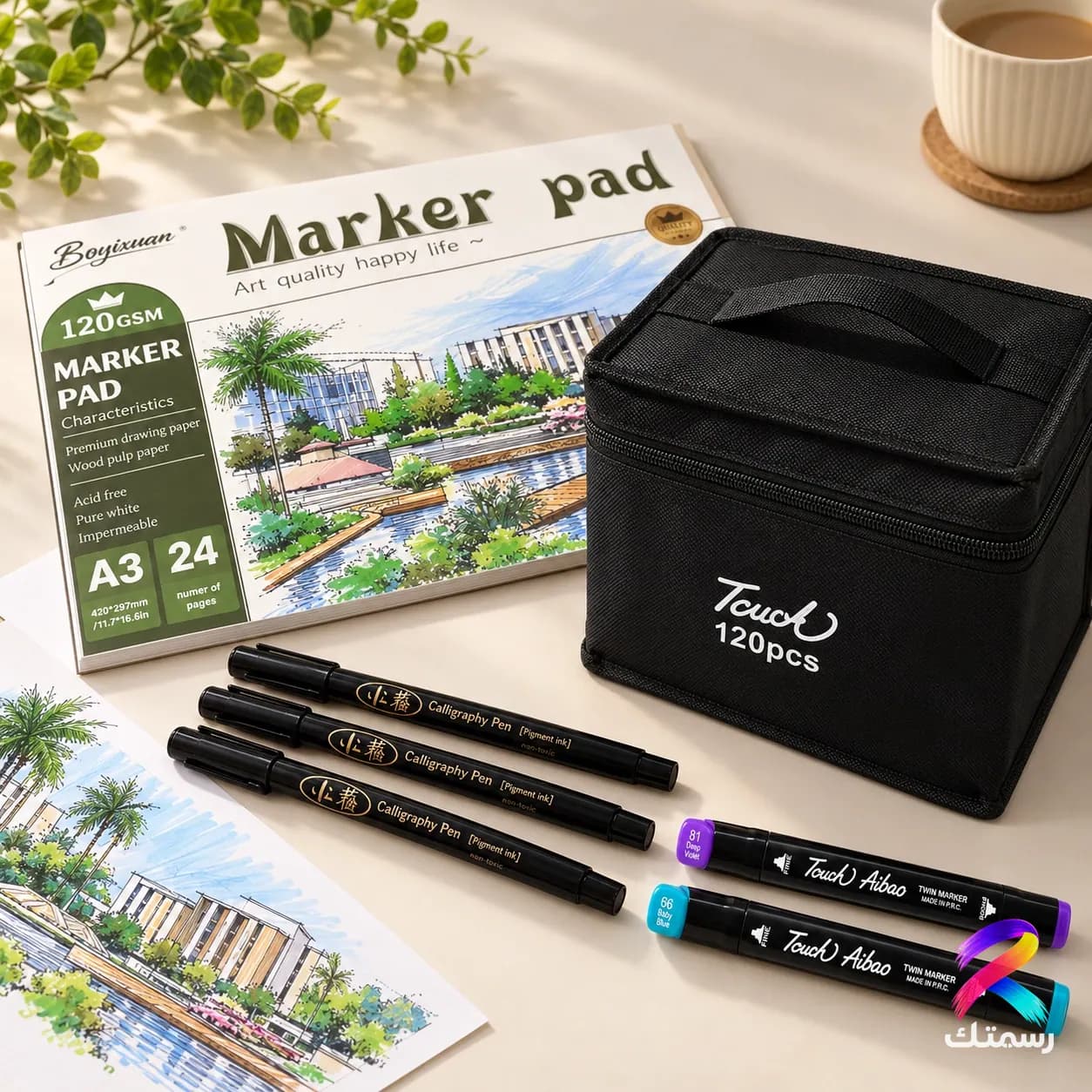
For a first year of architecture or interior design, a complete start in one order is the Pro Pack at JD 22: the Touch 120-colour box with 15 greys, an A3 120 gsm marker pad and three fineliners (0.5, 1 and 3 mm). If you already have fineliners, the box and pad alone come to JD 20.5. Once we confirm your order it usually arrives within 1 working day in Amman and 1–2 working days in Irbid, Zarqa and the other governorates, and you pay cash on delivery after checking it.
Last updated:
In this guide (6 sections)
What does an architecture student need?
For drawing and presentation courses you need three things: a marker set with plenty of greys, paper heavier than printer paper, and fineliners for line work. Here are three starting kits by budget:
| Kit | What's inside | Price today | Best for |
|---|---|---|---|
| Pro Pack | 120-colour box + A3 marker pad + three fineliners (0.5, 1 and 3 mm) | JD 22 | First year and render projects |
| Box and pad | 120-colour box + A3 marker pad | JD 20.5 | If you already have fineliners |
| Smaller budget | 60-colour box + A3 marker pad | JD 13.5 | Sketching and courses that need fewer greys |
The pack costs less than its pieces bought separately.


The colours you'll use most
In architectural rendering most of the work is greys and calm natural colours, not bright ones. According to the 120 colour chart — the same codes printed on the caps:
- 15 greys in four families: cool (CG0.5, CG2, CG4, CG6, CG8) for concrete and shadows, warm (WG2, WG4, WG6, WG8) for stone and wood, blue (BG1, BG3, BG5, BG7) for glass and water, and green (GG2, GG5) for shade beside trees.
- Sky and glass: Pale Baby Blue (144), Baby Blue (66), Sky Blue (76), Indian Blue (64).
- Trees and grass: Pale Green (59), Grass Green (47), Vivid Green (46), Mint Green (56), Forest Green (50), Deep Green (52), Herb Green (43).
- Wood, earth and brick: Yellow Ochre (101), Burnt Sienna (95), Natural Oak (91), Chocolate (92), Chestnut Brown (98).
- Skin tones for people in the scene: Skin White (131), Baby Skin Pink (133), Barely Beige (29), Rose Beige (97).
- Black (120) for deep shadows and detail, and the colourless blender (0) to soften edges.
Which grey suits which material is common rendering advice, not a rule: test on a spare sheet and choose what suits your project.
Paper and line work
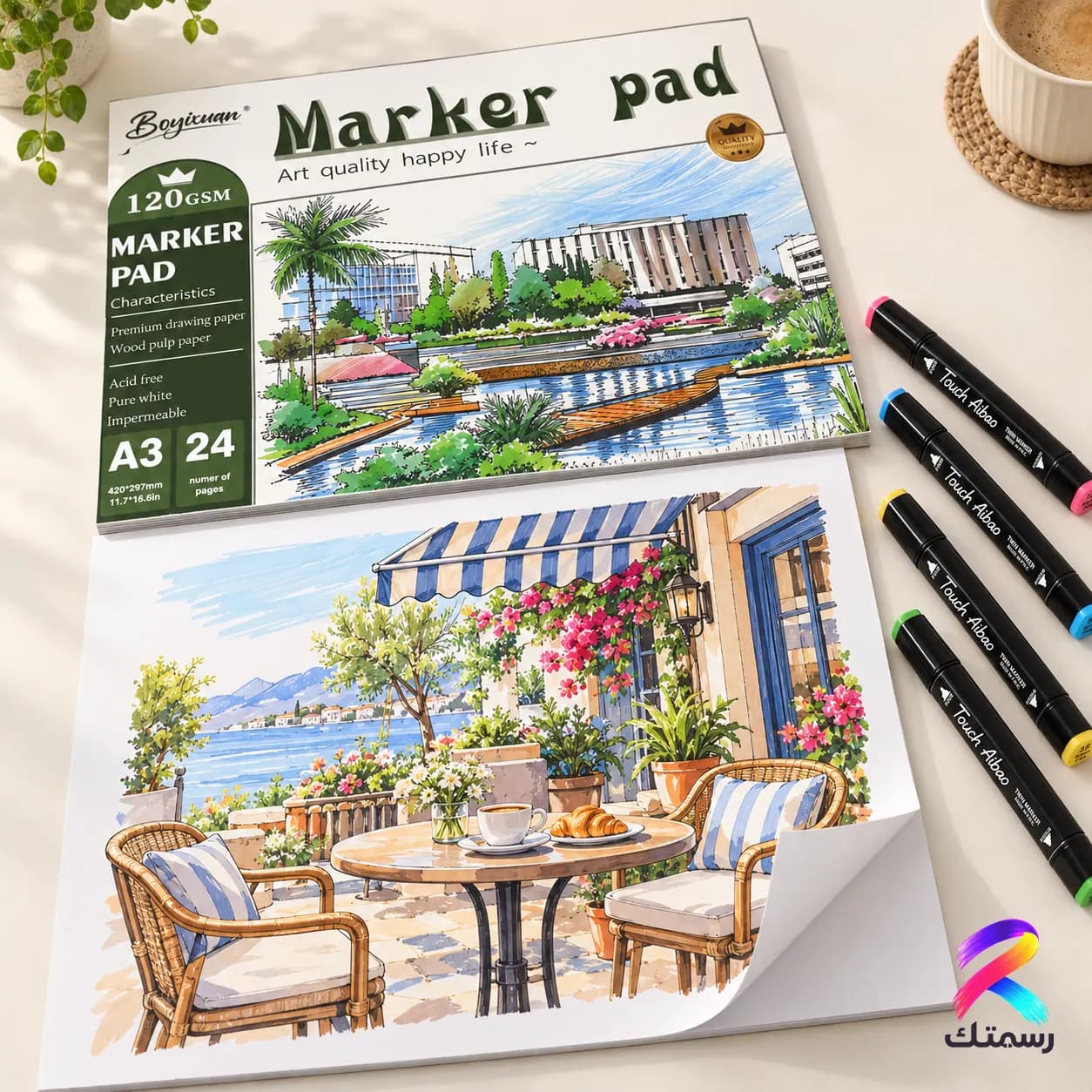
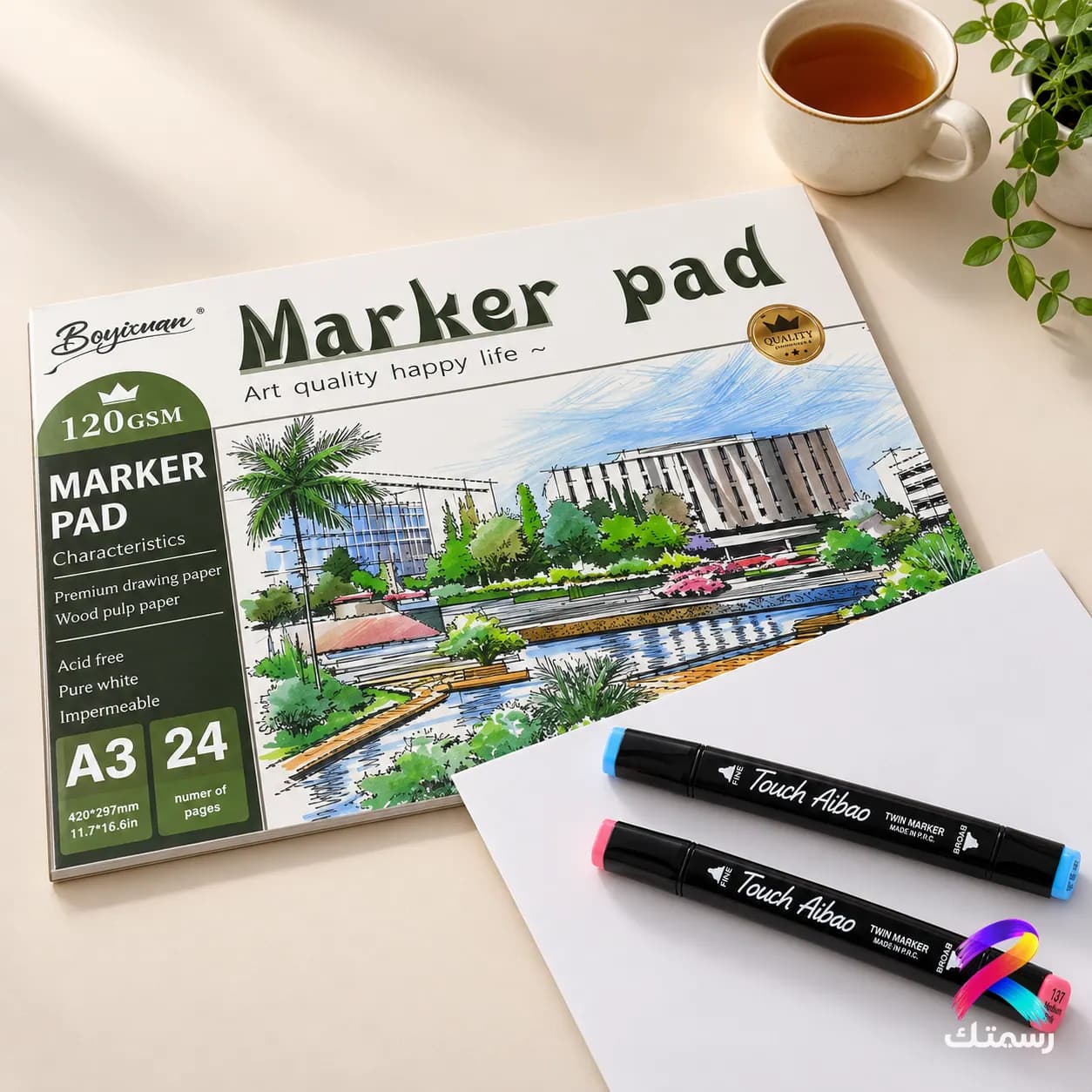
Paper: A3, 120 gsm
The marker pad's paper is heavier than printer paper and reduces show-through, and sheets come off the pad so you can hand in the board. It's not “bleedproof”, though, so always keep a sheet underneath. Details in the paper guide.
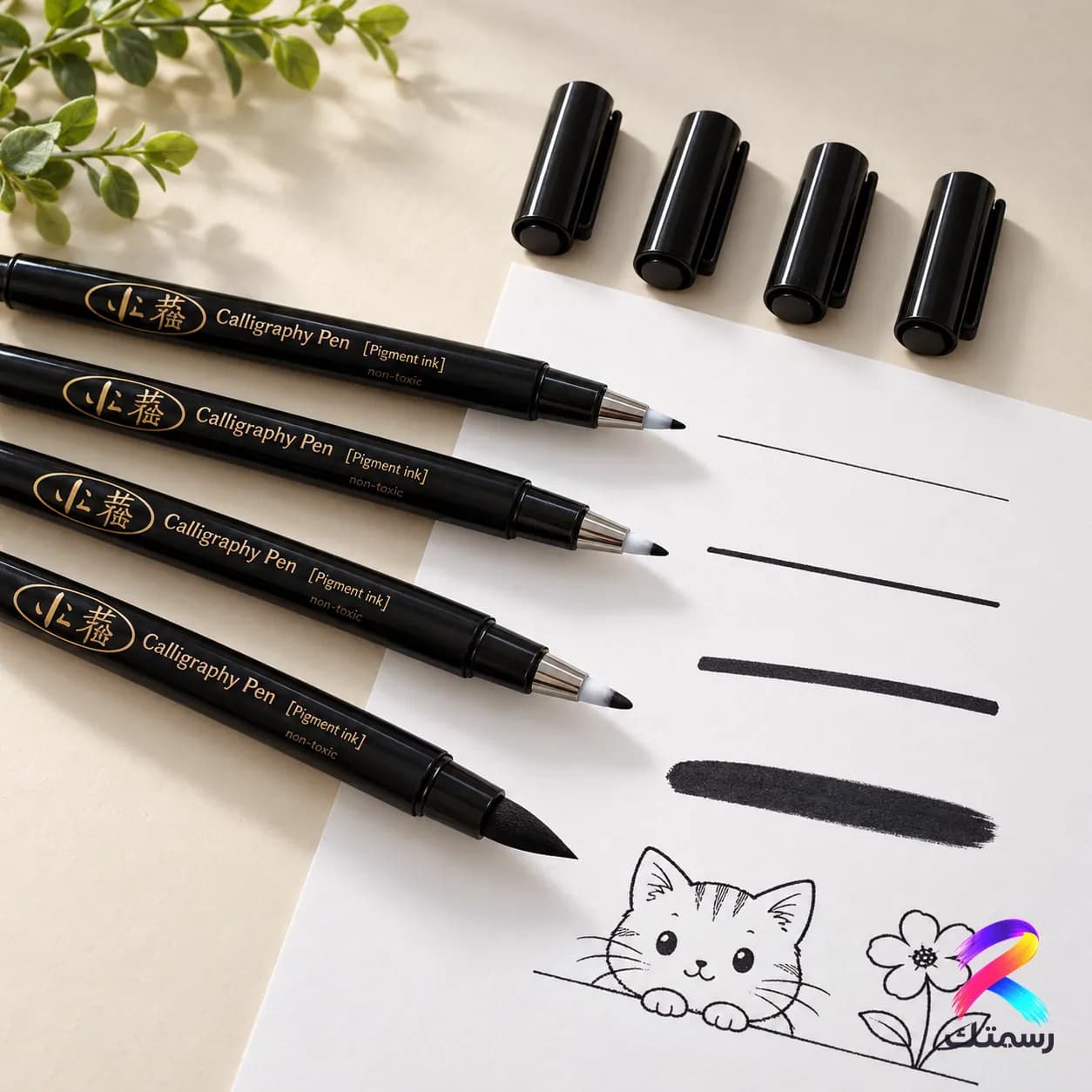
Fineliners: 0.5 and 1 mm for line work
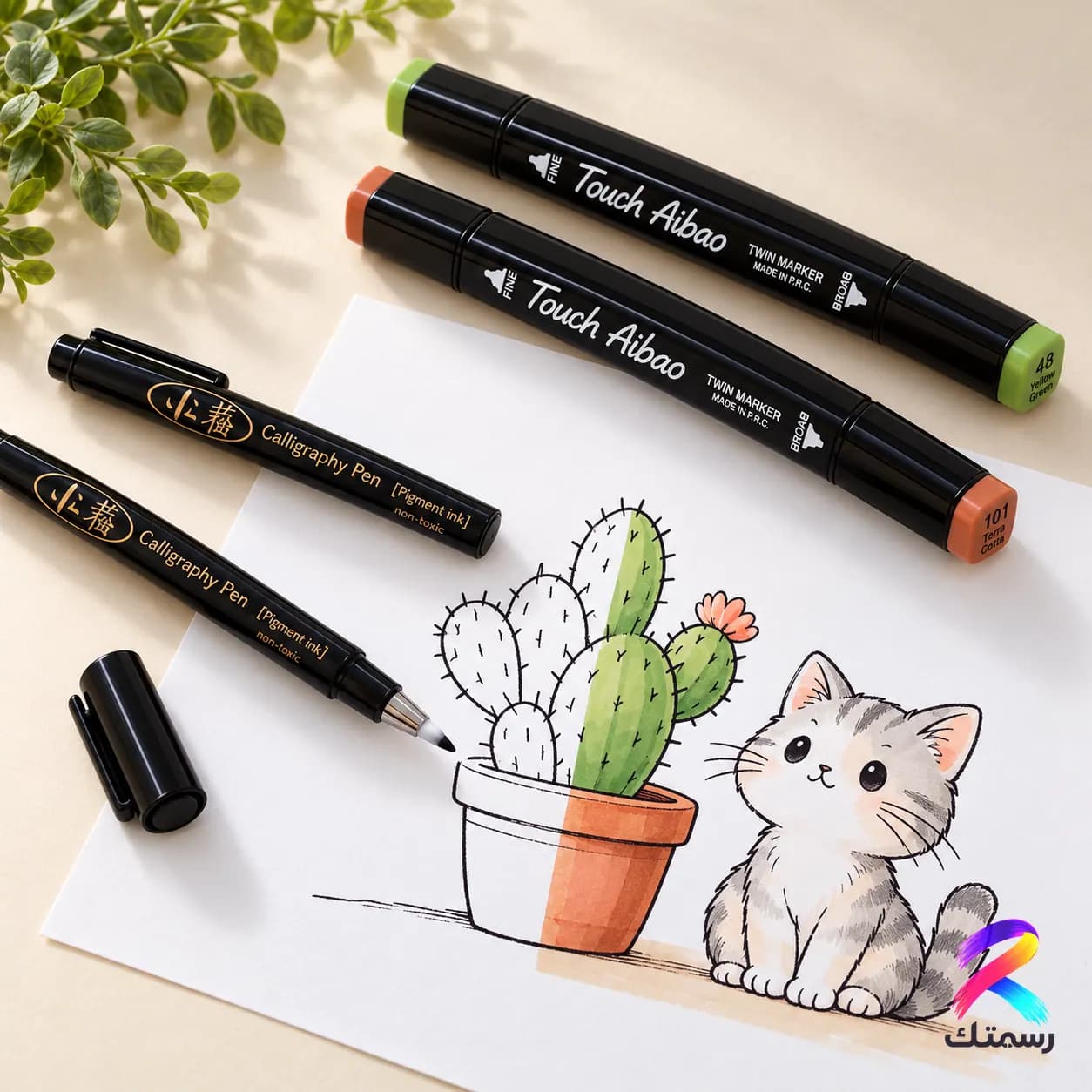
Ink the lines first — 0.5 mm for detail, 1 mm for outer edges — and let them dry before the markers; test at the edge of the paper that the marker doesn't drag the line's ink. The 2 and 3 mm pens are for bold lines and lettering.
Rendering tips with markers
- Light to dark: start with a light grey for the main shadows, then the colours, and the deepest shadows last.
- Keep white white: bare paper for highlights on glass and edges beats any colour.
- Pick a light direction: shade every surface facing away from it with the same grey so the board reads as one.
- Rulers: lift the edge slightly off the paper or use a raised-edge ruler so ink doesn't creep underneath and blot.
- Skies: quick horizontal strokes of light blue with white gaps, rather than filling it all in.
- Test on a spare sheet: before any colour goes on the main board.
Blending and storage basics are in our how-to-use guide.
Will it arrive before your deadline?
Once we confirm your order it usually arrives within 1 working day in Amman — from Jubeiha and Tabarbour to Khalda and the University of Jordan area — and 1–2 working days in the other governorates, which covers students at Yarmouk and JUST in Irbid and the Hashemite University in Zarqa. Delivery is JD 2.5 in Amman and JD 3 elsewhere, free on orders of JD 30 or more. We can't promise an exact hour, so order at least two or three days before your jury. You pay cash on delivery after opening and checking the order. For a group order for a studio or a student society, see bulk orders.
Frequently asked questions
Are 120 colours enough for an architecture student?
For most first- and second-year courses, yes: it has 15 greys in four families, natural colours for trees, wood and sky, and skin tones. If a colour you use a lot runs out, though, we don't sell single pens at the moment, so plan for that.
How many greys are in the 120?
15: cool (CG), warm (WG), blue (BG) and green (GG) greys from light to dark, with their codes printed on the caps.
Which paper should I use for renders?
The A3 120 gsm marker pad (JD 5.5): heavier than printer paper, with sheets that come off the pad. It's not “bleedproof”, so keep a sheet underneath.
Will it arrive before my deadline?
Once confirmed, usually within 1 working day in Amman and 1–2 working days elsewhere. There's no promised hour, so order two or three days before your deadline.
Is there a student discount?
There's no student code at the moment, but the Pro Pack costs less than its pieces bought separately. For a group order for a studio or student society, ask us about a quantity price.
Can I buy a single grey marker?
Not at the moment — we don't sell single pens. The boxes come complete: 24, 60 or 120 colours.
Do you deliver to Irbid and Zarqa?
Yes, to every governorate for JD 3, usually within 1–2 working days after confirmation, and free on orders of JD 30 or more.